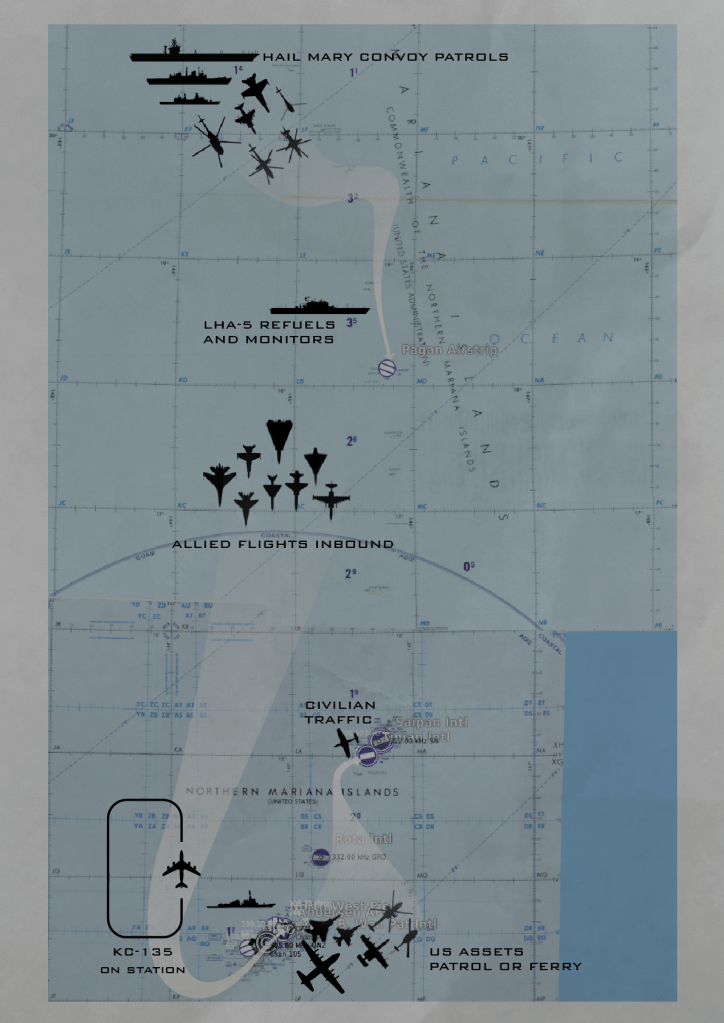
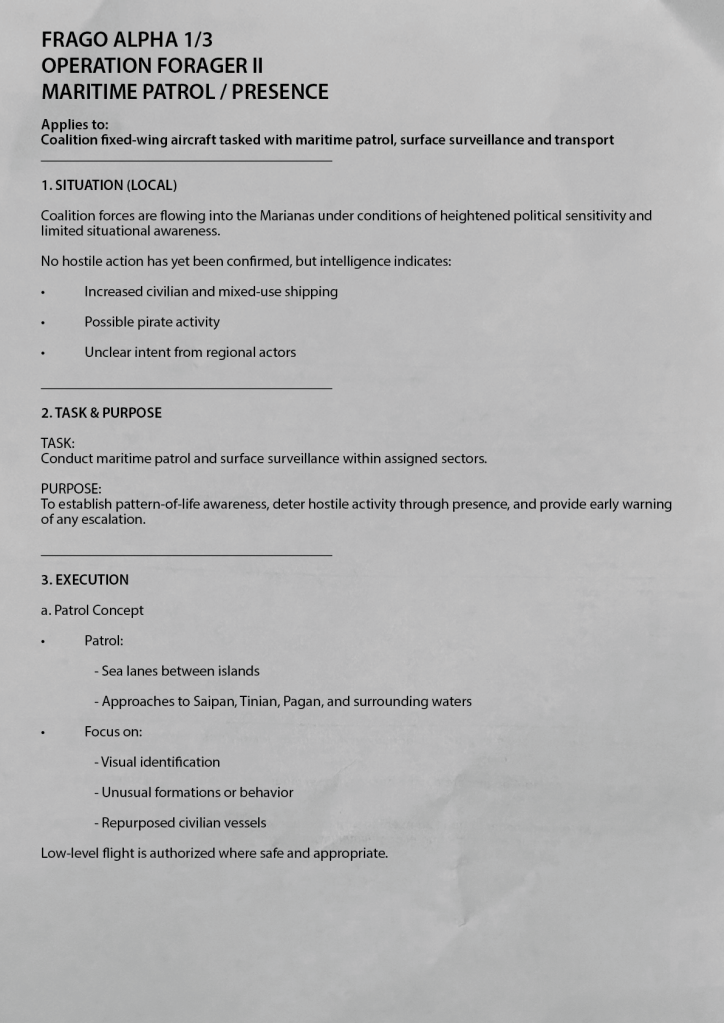
As a Christmas present to all the simmers out there, I’m releasing the DCS campaign I’ve been working on for the past 3+ years for free. It includes 30 playable aircraft over 7 missions and is set in the Marianas island chain ca. 2015 where the world is reeling from a deadly pandemic.
I chose Patreon to handle the hosting since other people who do altruistic projects did the same over there 🙂 Anyway, here’s the release trailers, a couple of kneeboard examples and the link for my new Patreon free stuff site 🙂
If you’re wondering what’s going on with the F-20A – I’m still working on that, the campaign just felt like a nice Christmas present so I had to ready it as a solid Early Access release. I’ll get back to the Hammerhead in 2026 – I promise! 🙂
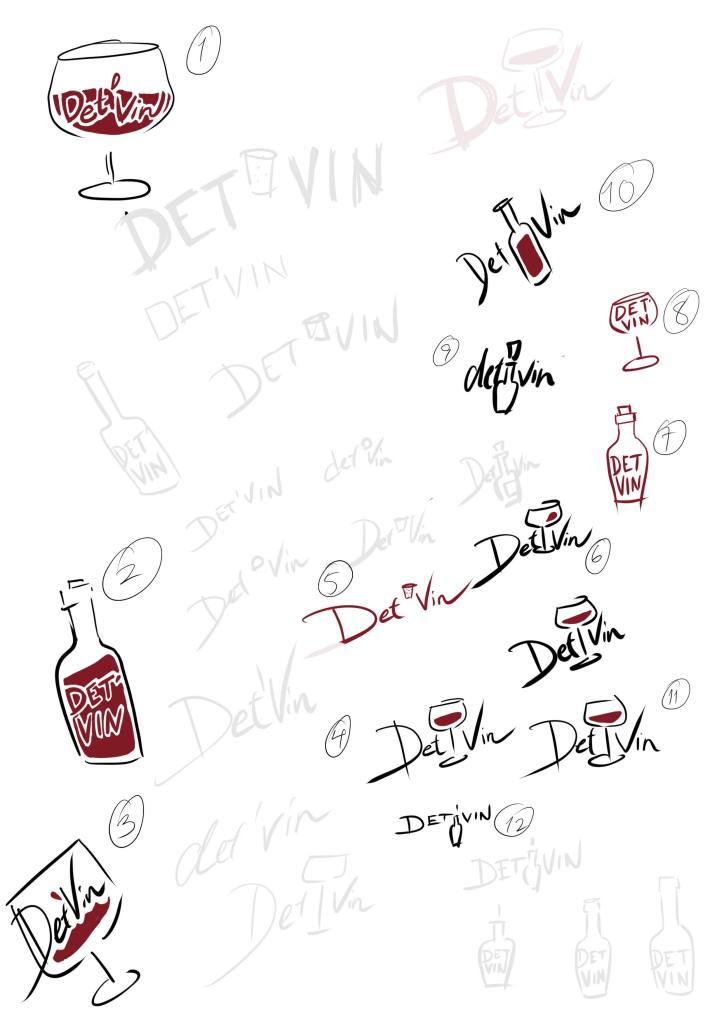
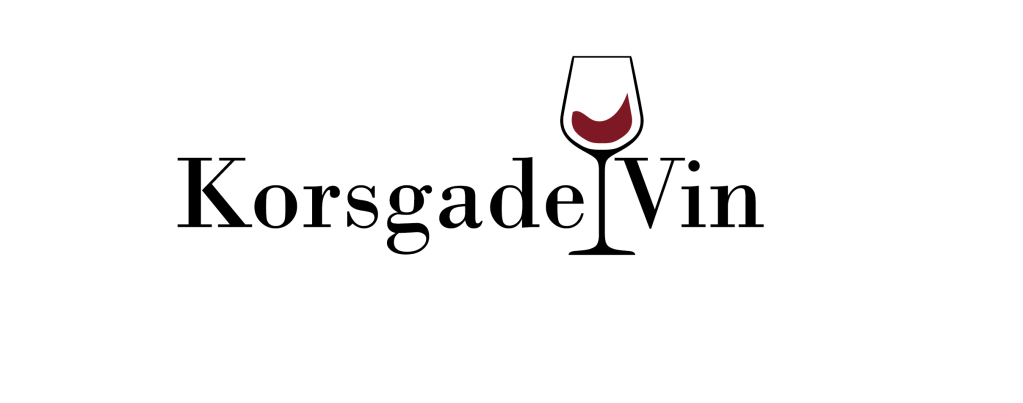
As a designer you will sometimes find yourself drawing upon something that is well hidden in your mental association library and that’s exactly what happened to me when I created the graphical identity for “Korsgade Vin”, a local wine shop. I grew up surrounded by classical artwork reproductions in the house of my parents and that of my aunt – among these were quite a few works by Henri Matisse. And somehow his simple line work found its way into my design process when I worked on the initial logo, which was then called: “Det Vin”.
There’s a certain song and rhythm which the client and I both liked in the hand drawn letters and wine glass. It felt like red wine with jazz. Sadly we had to park the identity for a couple of years since the client was a part of a larger wine house. Fortunately he recently decided to go solo, another decision was to anchor the identity in the charming medieval street that the wine shop resides in and hence the identity transformed into: “Korsgade Vin”.
It was possible to keep “Vin” and the glass, but the “Korsgade” lettering required another pass. For a brief moment there was also talk of reverting to a traditional typeface with an accompanying glass.
But even though the wine was still in motion, the logo itself seemed to lose its “music” which was a quality the client didn’t want to let go of. That means the logo retained the playful lettering and eventually ended up as seen below.
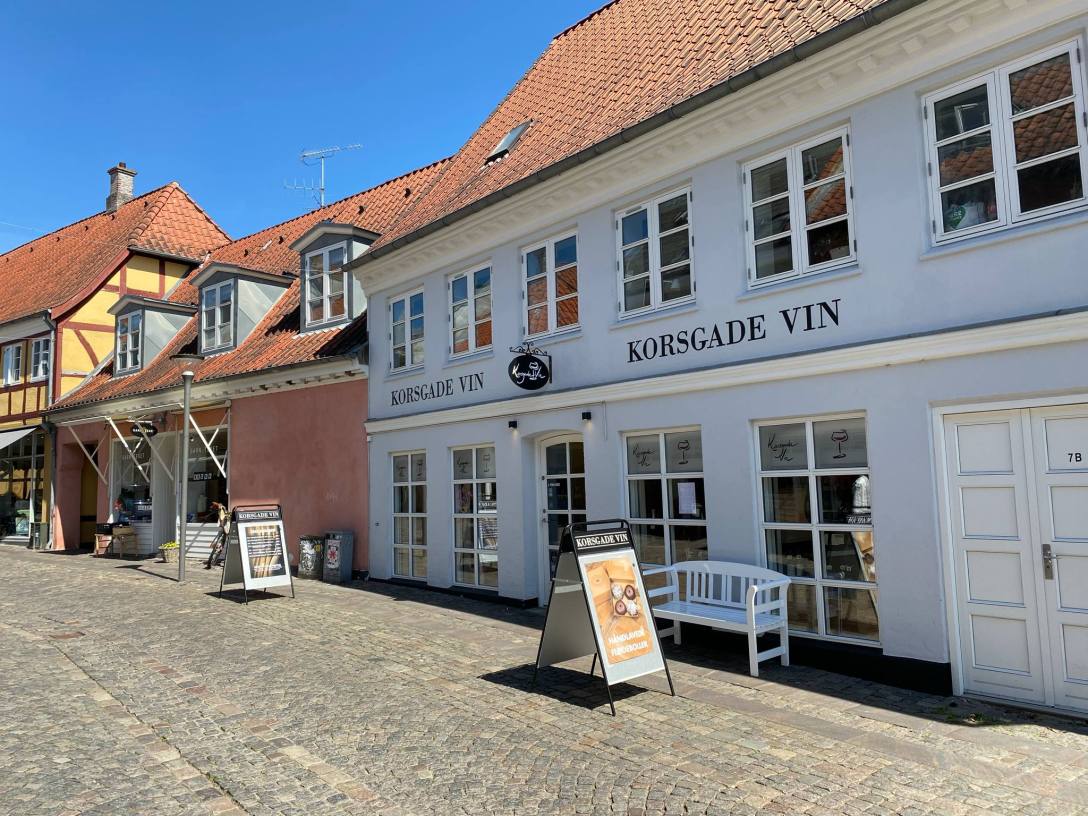
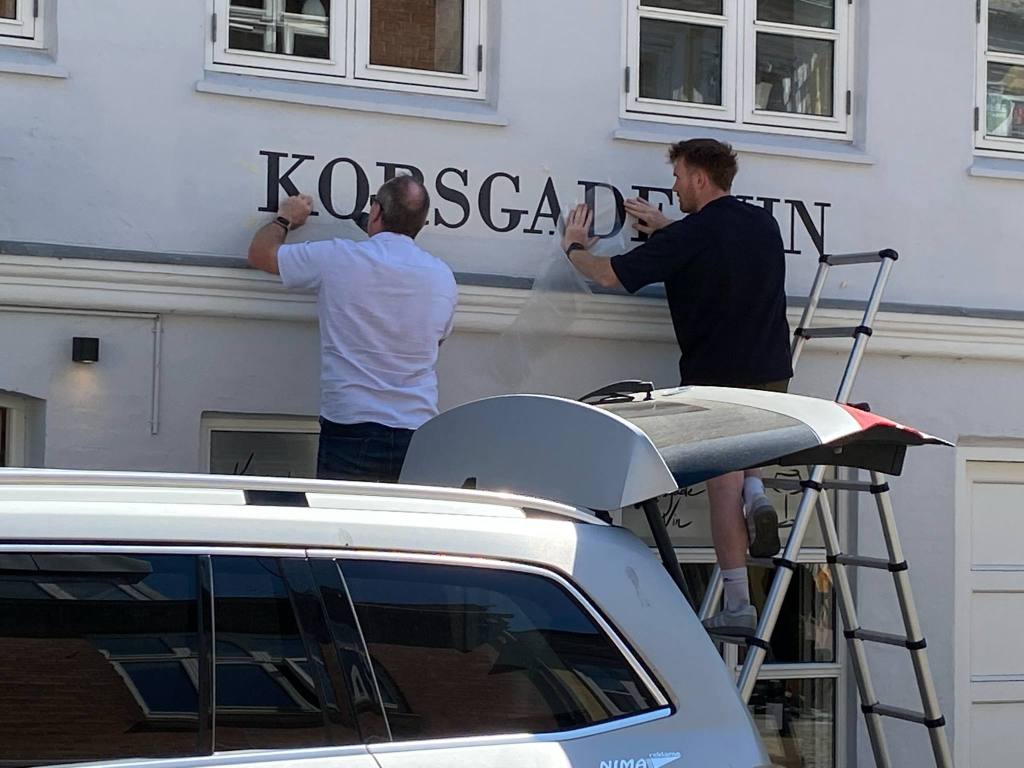
The hand drawn logo was unsuited for the long space above the windows on the shops facade though, so as an addition to the identity, it was decided to allow for a regular font here and from a short process Bodoni was chosen as a fitting typography.
I’m excited to see how the new identity fares and will surely join in one or more of the wine shops many – delicious – events! From wine tasting to drop in events. The shop can be found in Korsgade in Svendborg on Fyn in Denmark.
Spent a lot of time updating the Block 12, so much so that it’s now renamed Block 20. New skin with IR masking, lots of fixes, longer flight time, throttle issues minimized, dynamic lights now work and a bunch of analogue instruments added 🙂
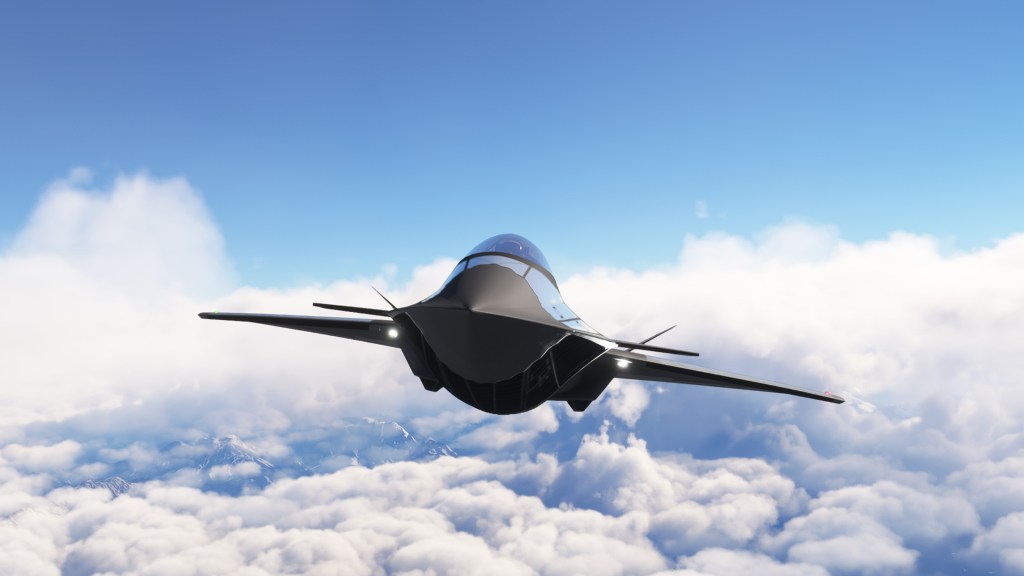
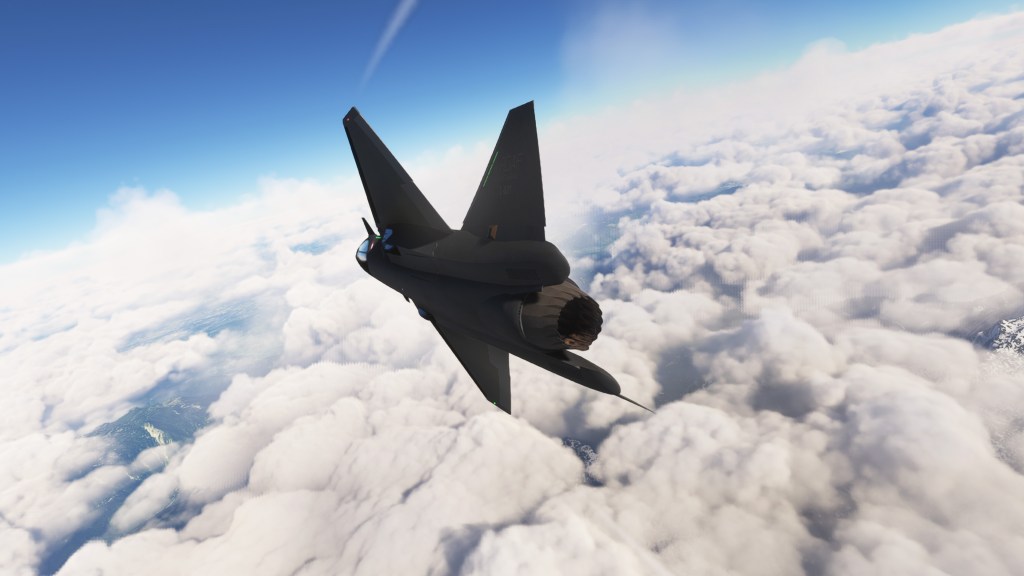
This jet is an homage to the F-20 Tigershark that never really got its proper place in aviation history, although it and the F-5 could be called the grandfather of perhaps the F-16 and the F/A-18, maybe even the JF-17. Conceptual stealth fighters are becoming very visible as technology looks towards the future generations in fighter aviation.
Concepts like 6th gen FCAS, NGAD, Tempest and J-36 spring to mind. They give a fleeting insight into what the next generation of air dominance fighters might look like. The ideas have captured smaller industries as well – Turkish TAI TFX or Swedish Flygsystem 20 seem to be serious proposals for native fighter concepts. In 2019 a Lt. Col. in the Royal Danish Air Force pitched the idea of a fighter concept that could support Denmark’s F-35’s in maintaining national borders and in other specialized roles.
The design should also align with the ideals put forward by the fighter mafia: That a fighter should be small, nimble, easily maintainable and be inexpensive to keep flying. Which meant the design quickly adopted roots in the F-5 and F-20 – out of respect for those designs the designation F-20 was maintained. This concept is a thought experiment visualized in Microsoft Flight Simulator, the virtual aircraft draws heavily upon the F/A-18 in the sim, which is what the real concept would also have to do: Be based on existing parts and technology. That is why the engine is an F110 engine borrowed from the F-16’s that danish ground crews already know very well and why the glass cockpit / avionics look similar to 4th gen. The aircraft design itself is based on the YF-23 ( you can tell by the pelican tail ) the F-16 ( small size, big engine ) the SR-71 ( the chines around the nose ) and the F/A-18 both in multi rudder functionality – and finally the F-35 thrust vectoring from the B model, nozzle design and the diverterless intakes.
The aircraft was also designed to operate from austere airfields, the dorsal intake helps in this regard as well as making sure the engine is fed air no matter the orientation or air speed of the aircraft. The canards help with high maneuverability and grants the jet limited STOL capability.
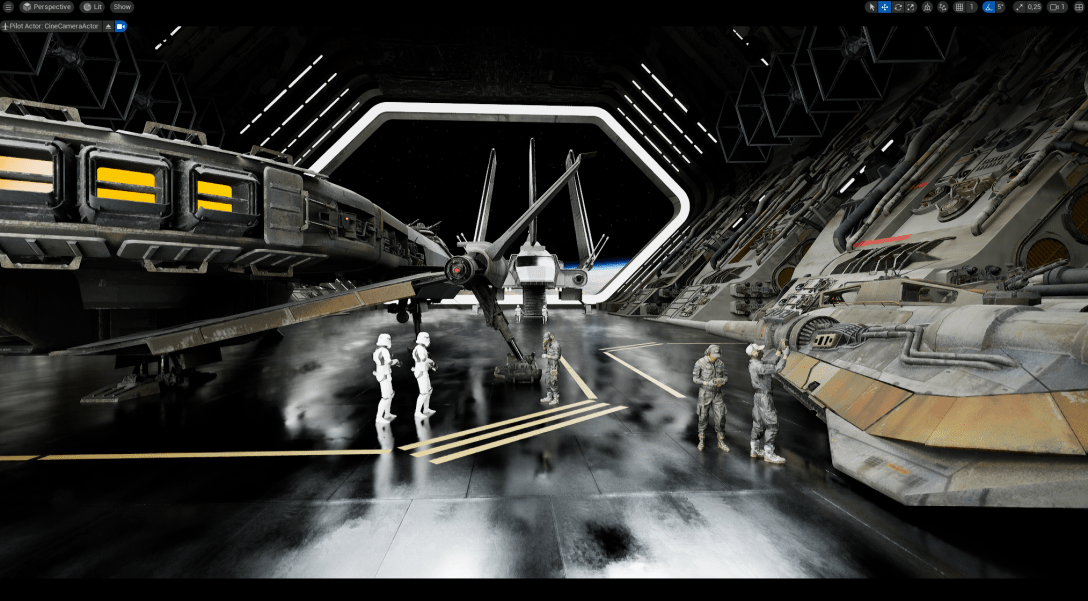
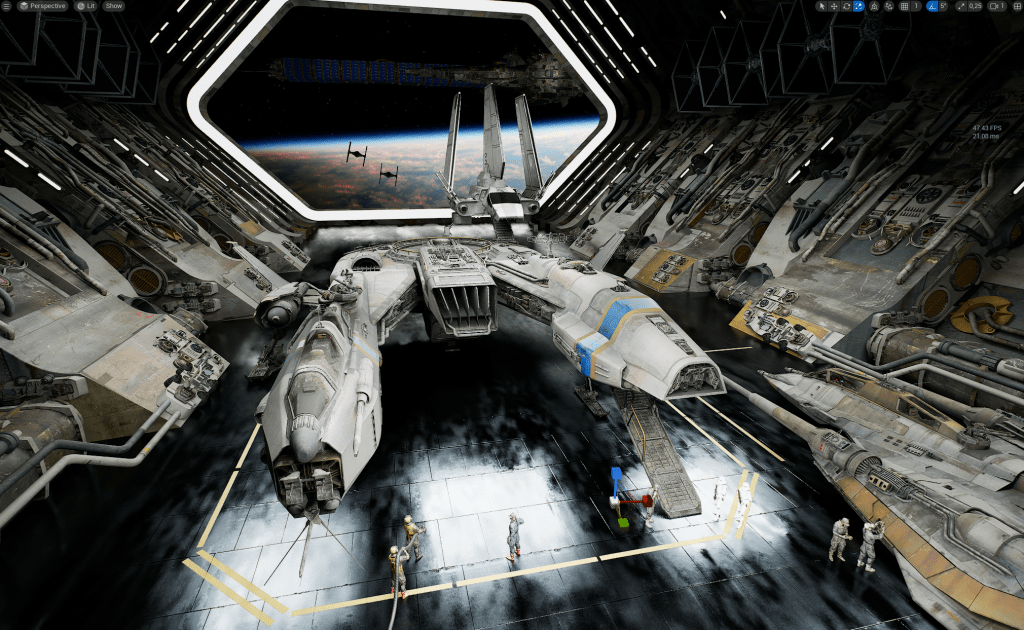
Spent a weekend nursing a summer cold… But since I was confined to the house I had time to look into Unreal 5 and ended up making this! I’m using the Greebles pack from “Technouveau” and tutorials from “Bad Decisions” on Youtube – maybe I’ll go and design a spaceship next..
5 second zoom in
I’m impressed at the high quality renders and speed at which the engine runs even with complex geometry and shaders! – it’s kind of addictive! It took a while to harmonize the new assets with the traditional Star Wars troopers and spacecraft, but I think it came out ok, it feels like an imperial outpost of sorts..
Sometimes scaling needs to be tweaked to fit the scene.. In this case the center ship got a little too big
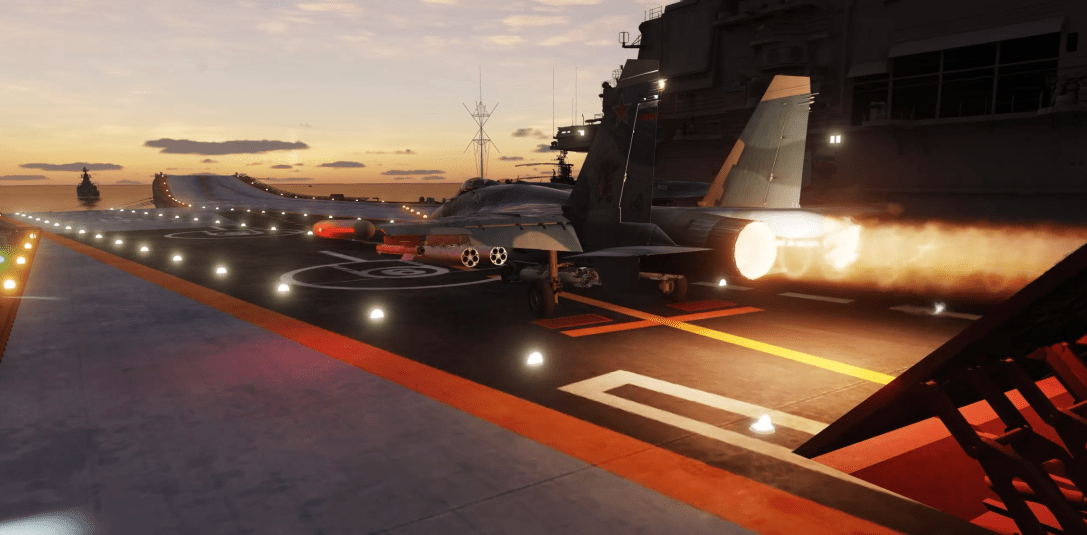
So what do you do for fun around here? – well for me – I’m really into flying these days – And currently I’m midway to having my real world private pilots license, but on the side I’m also creating a campaign for the most complicated combat simulator accessible for civilian use – and here’s the teaser trailer! because, you know, why not commercialize it and have my hobby work for me? 😀









 Witus works - Work with us